Friday, May 13, 2011

May 9, 2011 France Adventure

Bonjour à nouveau tout le monde!  Hello, again, everybody and welcome back to Cépage et Cuisine, Mary’s and Brian’s wine and food blog.  Here are a few experiences from May 9 in Burgundy.

After a morning trip to the marché in Nuits-St-Georges for Mary’s abricot pastry, we set out to Morey-Saint-Denis in the Côte de Nuits, the northern half of the Côte d’Or of Burgundy. 


Among other famous vineyards, Morey is home to Clos de Tart and Bonnes Mares, both of which are Grand Cru vineyards.  For Pinot Noir and Burgundy enthusiasts like us, this is hallowed ground. 


Morey is also home to Domaine Dujac, a prestigious Burgundy producer.  I was ecstatic to get an appointment for a tour and tasting.  The domaine was purchased by Jacques Seysses only about 50 years ago, a blink of the eye in Burgundy time.  Much of the day-to-day is now handled by Jacques’ son, Jeremy and Jeremy’s wife, Diana, an American who is herself a member of a Napa Valley wine family.  In the photo below you see Diana leading the tour.  This is a very busy time in the vineyards of Burgundy and we greatly appreciate vignerons and their families taking the time to show us around.  An interesting note about Domaine Dujac is that the grapes are fermented in whole clusters, which means the whole berries and the stems are included in the fermentation before pressing off the fermented juice to barrels.


Later in the day we visited the cellar of Domaine Chandon Briailles in the village of Savigny-lès-Beaune.  The estate is very old and the domaine has been in the family of the Count and Countess Aymard-Claude de Nicolay since 1834.  It is now managed by Jean-Claude Bouveret and her brother, François de Nicolay, the fifth generation of the family to run the domaine.


Madame Bouveret was gracious enough to take us to the cellar and allow us to taste through their 2009s as well as one slightly older vintage.  The wines were delicious, balanced, elegant, approachable now but will be so much better in a few years.  The cellar is amazing.  It was hand dug from solid limestone by the Cistercian monks over 900 years ago.  The symmetry and detail, the generations it took to create, the engineering perfection…hard to comprehend for Americans whose country is so relatively young.

Then it was off to dinner at Les Chavaliers, a restaurant in the heart of Beaune.  We visited there last year and had a memorable dinner of roast duck, so we wanted to go again.  Once again, it was a delightful dinner outdoors on the plaza.  We both had the duck in a fig and cassis reduction, pommes de terre dauphinoise (scalloped potatoes) and a plat du fromage, or cheese course. 

We selected a village level wine by Maison Louis Jadot.  It was delicious, not as complex as the Pommard we had a few days ago at La Ciboulette, but paired beautifully with the dish.  Here are my notes on the wine.
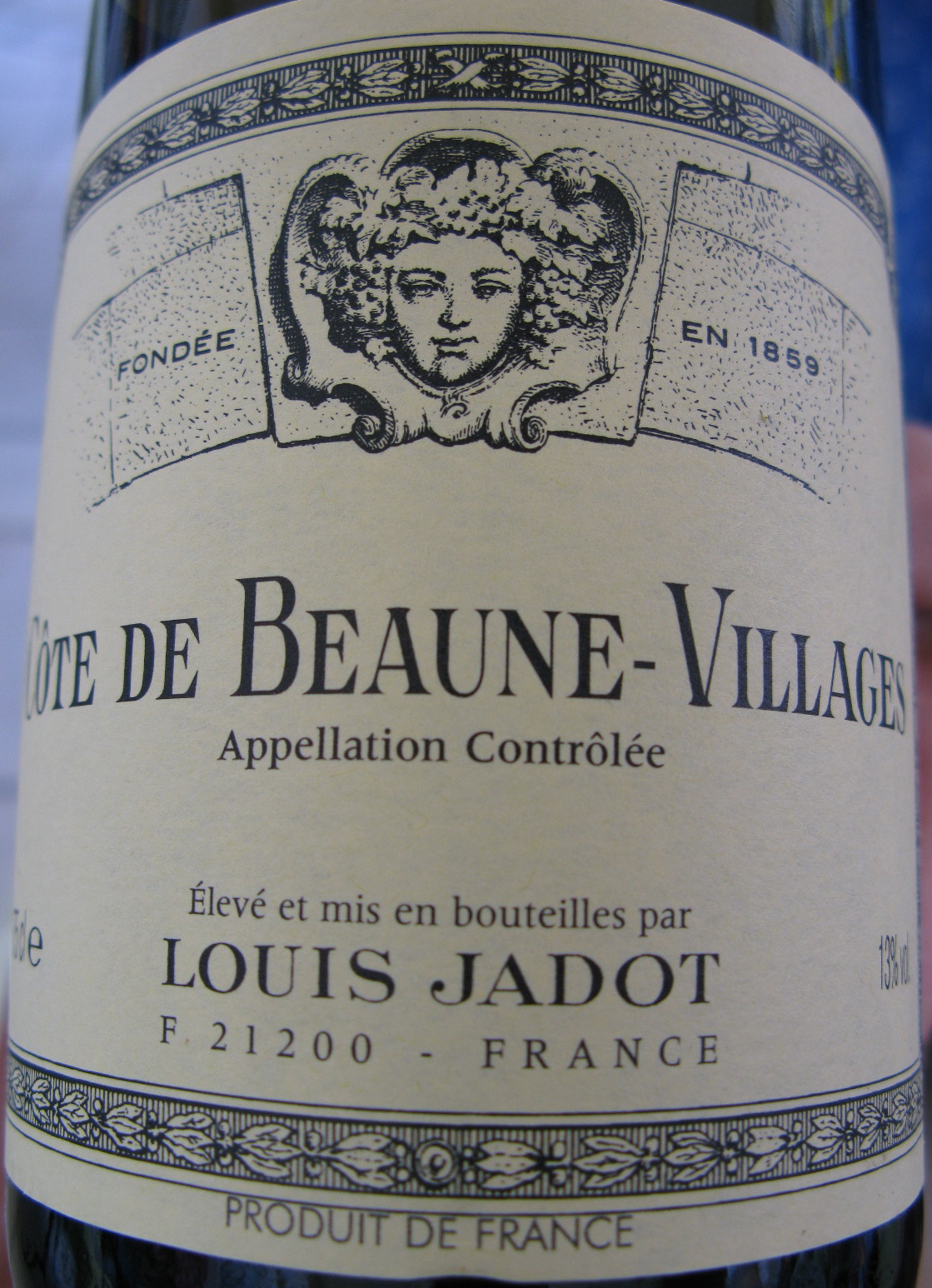


Maison Louis Jadot Côte de Beaune-Villages 2006.  This was a very nice wine, not highly complex, but delicious with a dinner of duck breast and the accompaniments.  Still fairly young, the aroma profile was mostly of bright fruit and a little earthy, mineral note.  The palate was smooth, medium-bodied, with nice, medium acidity for good balance.  The flavor profile was mostly red cherry and berry with a bit of spice on the finish.  Nicely balanced, moderately complex, medium length, solid but not excellent.  13.0% alcohol.  The restaurant price was €55.

  
That’s our post for now.  We’ve been busy and haven’t posted every day, but I hope to catch up over the next few days, so check back frequently at Cépage et Cuisine.  In the meantime,

Cheers !

Mary♥Brian

Monday, May 9, 2011

May 8, 2011 France Adventure

Bonjour à tous!  Hello, all, from Villers-la-Faye in the Côte d’Or and welcome to Cépage et Cuisine, Mary’s and Brian’s wine and food blog.  As promised (or forewarned), we’re blogging while we’re enjoying wine, food, and generally soaking up France!  We arrived Saturday, May 7.   Here’s the mairie, the town hall in the village.
Sunday was our first day to venture out after resting from the long journey.  The first order of business was a walk to the boulangerie for a fresh pastry for Mary.  It’s a tiny little shop in the village.  The delightful lady who runs the shop can’t speak a word of English, but smiles are a universal language.  We just call her madame. 
Mary selected an apple tart for her first day.  Here she is to describe it.
It was a wonderful little tart, not too sweet, with a papery thin crispy crust in several layers. The French have a lighter hand with sugar than Americans. Their pastries are not as heavy and not as filling.
Here’s a link to an amateur video produced by another visitor a few years ago. It gives you a good idea of how the village looks.  We thought it was a very cute video.


Brian here again.  We struck out through the countryside just to see what we could see.  Every little village is a picture postcard.  Here are a few pictures to give you a good idea of the topography and architecture.  L’eglise, the church, dominates most villages and many of the churches are hundreds of years old.  This is a hillside village near us called Arcenant.
 
Just a bit down the road is the village of Bouilland where we visited the ruins of an ancient monastery called Abbaye Ste. Marguerite, founded by monks of the order of St. Augustine and dating to the late 11th century.  Now that’s old!  Coming down from the mountain where the ruins are located you can see how these little villages seem to be just nestled into the countryside, white Charolais cattle dotting the hillside.  To the east is a mountain ridge with steep stone cliffs.
 The next town was Savigny-lès-Beaune.  Used in names of towns, the conjunction, “lès”, means “near.”  Beaune is the largest town in the area and Savigny-lès-Beaune is nearby, or Savigny “near” Beaune.  We happened onto a vigneron, a wine producer, who was ouverts pour dégustation et vente, tasting and sales.  Once again, not a word of English, but we managed to figure out the wine we tasted was from the vineyard directly behind the winery.  It is delicious and we picked up a bottle for what I think is a bargain price of €20, which would be about $29 at the current exchange rate.
Back at the house in Villers-la-Faye and just before heading out to dinner we visited my mother for Mothers Day in Georgia via Skype while she attended a family gathering at the home of my sister, Kaye.  Technology is amazing.  A slightly belated Happy Mothers Day to all you moms reading the blog.
On the recommendation of the owners of the house where we’re staying, we had dinner at a restaurant in Beaune called La Ciboulette, just inside the arch of the castle of Beaune.
 
We were not disappointed!  I started with escargots, which we forgot to photograph, and which were delicious.  Mary had rack of lamb and I had filet of Charolais.  The food was wonderful and the presentation exquisite with tiny portions of spring peas, scalloped potatoes, onions and carrots.  Mary said, “I would have liked vegetables growing up if they tasted like this!”


The third course was a plat du fromage, a cheese platter.  We selected a Brie, a Chèvre, a Camembert, and an Epoisses and they were all wonderful. 

Dessert for Mary was mousse de deux chocolat, a white and dark chocolate dessert.  We both had coffee.  It was a long, lingering dinner on the sidewalk outside a small French restaurant, just like you would imagine it, the air fragrant with blooming stock.  Mary and I fell in love all over again.
Now for the wine.  We both wanted a local wine, which in Burgundy means Pinot Noir.  I knew we needed something with good structure and balance to stand up to a hearty dinner of lamb and beef.  On the recommendation of the proprietess, we selected a Pommard by Domaine Patrick Javillier-Guyot.  I am completely unfamiliar with this producer and I suppose the location and the ambience made everything taste better, but we both just loved this wine.  The perfume, the flavor, the balance, and the complexity blended seamlessly with the food.  Here are my notes on the wine.
Domaine Patrick Javillier-Guyot Pommard 2004.  The perfume of this wine was amazing.  It showed wonderful earth and dark fruit notes, even a bit rustic, which I enjoy, raspberry, blackberry and plum.  The palate was silky with medium acidity and polished tannins, but with the structure to stand up to the beef and the lamb.  The flavors showed delicious dark cherry, berry, plum, exotic minerality, and spice notes.  It was wonderfully balanced, complex, and long finishing, an excellent wine.  We both loved it.  13.0% alcohol.  The restaurant price was €55, which is about $79.
Well, everybody, that’s our first post from Burgundy.  Check back frequently here at Cépage et Cuisine for more articles about our wine and food adventures in France.  In the meantime,
Cheers!
Mary♥Brian

Monday, May 2, 2011

Pizza on the Grill and Wine of the Week

Greetings, everybody, and welcome back to Cépage et Cuisine, Mary’s and Brian’s wine and food blog.  This post started out as a brief wine of the week article, but morphed into a review of our newest food gadget, so I’m going to include both.  Our new toy is a pizza stone that is designed for the grill, “turning your grill into a pizza oven,” according to Sur la Table, and I must say…we love it!  Mary makes our pizzas from scratch, including the crust, which is all whole grain and sugar free.  We blogged about that several months ago, which we invite you to read, so I won’t go into detail about it here.  We also learned a few years ago that the secret to a great crust and great homemade pizza in the oven is a pizza stone.  We have a couple of them that we have put to good use over the years. Without the stone, the crust often just has a cardboard texture.
Our new stone is glazed for use in the oven or on the grill, is dishwasher safe, and you can use pizza cutters or knives right on the stone.  We have experimented with cooking crusts right on the grill rack, which turns out okay, but is a little tricky and easy to overcook.  It’s almost impossible to cook full size pizza crusts directly on the rack.  With a stone, however, you can prepare your pizza, slide it onto the preheated stone on the grill, get great grill flavor, that delightful char around the edges, fantastic crust, and include whatever toppings you desire.
Start your grill with the stone on the rack and heat it at maximum heat for between 10 and 15 minutes.  Slide the pizza onto the stone, keep the heat pretty high, then cook for only about 12 minutes for a perfect pie.  Mary’s going to talk a little about something different she did to make the crust her best ever:
I’ve watched pizzas being made in pizza parlors, and could never get the hang of putting the raw dough into the oven, so I’ve always pre-cooked my plain pizza crust just a little before putting on the toppings. The pizzas usually turn out fine, but this time we decided to experiment with putting the toppings on the uncooked dough and then sliding the whole thing onto the hot stone. I used a wooden pizza peel to move the pizza from the kitchen to the grill. I dusted the peel generously with cornmeal, then dusted the bottom of the dough with flour, just to make sure it would slide off onto the stone. Still, we had a little trouble getting the pizza to transfer onto the grill. We used a spatula to loosen the edges, and finally the whole thing slid off!
It turned out great! The crust was crunchy, kept its shape so it was easy to hold, yet had a soft doughy texture on top. I think we’ll cook the crust this way from now on, whether in the oven or on the grill.
Brian carried the stone with pizza into the kitchen and put it on the stovetop.  It is very hot so be careful!  You can see in this photo that he’s using a sharp pizza cutter right on the stone.  It doesn’t leave a mark at all.  Here’s Brian to talk about the wine.


This wine is a blend of Syrah and Petite Sirah from Preston of Dry Creek.  Unlike many modern California producers, Lou Preston produces wines that aren’t overripe and over alcoholic, retain balance, and offer complexity.  It is a full-bodied wine with loads of fruit, to be sure, but it had that great meaty/gamy character that I enjoy so much in a Syrah-based wine and the structural intensity that comes from Petite Sirah.  He calls the blend Syrah-Sirah, an expression of the slightly different spellings of the two grapes.  We really enjoyed this wine with the pizza.  Here are my notes.
Preston Vineyards Syrah-Sirah Dry Creek Valley 2005.  For a change, this was a really nice Syrah blend from California, not overripe or unbalanced.  The nose shows a wonderful, complex, meaty, gamy quality that I like in a Syrah, similar to a Northern Rhone Valley expression.  The palate was New World in style, appropriately so, with a soft texture and low acidity, but it was balanced and had nice fruit, smoky elements, pepper, and savory notes.  I would describe it as moderately complex with a medium finish, a very decent wine that paired well with dinner.  55% Syrah, 45% Petite Sirah, 13.9% alcohol, a nice change from the Alice-in-Wonderland alcohols of many wines nowadays.  We paid $28 for this wine at the winery on one of our wine trips.
There you have it folks, a terrific casual dinner with nice wine to sink your teeth into.  We’re really enjoying the grill stone.  I’m thinking of getting another or two to use as gifts for other people who love both homemade pizza and cooking on the grill.  We got the stone from Sur la Table (http://www.surlatable.com/) for $49.95 plus shipping.
That’s our post for today.  We hope you enjoyed it.  Mary and I are departing soon for a couple of weeks of wine and food travel and hope to post frequently.  Check back often here at Cépage et Cuisine, especially over the next couple of weeks or so.  In the meantime,
Cheers!
Mary♥Brian
P.S.  To our Georgia readers and anybody else across the Southeast who was affected by the tragedy of the tornadoes, you are in our thoughts and prayers every day.

Sunday, April 24, 2011

Crispy Duck Legs and Parsley Potatoes

Bonjour à tous!  Hello, all, and here we are again at Cépage et Cuisine, Mary’s and Brian’s wine and food blog.  Today, we’re sharing our experience with crispy duck legs, a French recipe we recently acquired from Mark Bittman’s now discontinued (L) cooking column in the New York Times.  We have gotten many great ideas from him and we’re giving him full credit for the success of this one.  On the other hand, even a great recipe can turn out badly if it isn’t executed well and that’s where my wife-chef shines.
Since our first cassoulet dinner over a year ago and especially since our first visit to France last year, we have become fans of duck.  I might even call it “the other dark meat.”  It is dark meat poultry, has the texture and satisfaction of red meat, can be prepared in a variety of ways, and renders a fat that is simply fantastic for cooking.  Mary will talk about that below when she describes the parsley potatoes.  Here in the Jackson area, duck is available only at specialty stores, not at regular supermarkets, but it is not hard to find.
This recipe is a bit of a twist on braising.  The general idea of braising is long cooking with liquid to produce very tender meat, leaving the meat deliciously moist, but crispness is often out of the question.  I won’t steal Mary’s thunder, but the basic idea with this recipe is to add only enough braising liquid to come about halfway up the duck legs.  What is above the stock is roasted, so the recipe is actually a combination of braising and roasting.  Who knew?  So, here’s Mary to talk about ingredients, prep, and cooking.  Take it away, mon amour.
I didn't take an ingredients picture this time, but it's really a fairly simple recipe.  I bought a pack of duck legs for the recent cassoulet dinner (there is a post on that you can read if you like), but it had 8 duck legs!  I used 4 in the cassoulet.  We used the other 4 for this dinner.  The other ingredients were just the vegetables for the mirepoix (carrots, onions, celery), homemade chicken stock, salt and pepper.  That's it!
I put the duck legs into a cold, oven-safe frying pan and then heated them over medium-low heat for browning.  That’s important because if the heat is too high, the rendered fat will burn and not be good for cooking the potatoes.  Using lower heat renders nice, clear, colorless duck fat, which is what we want.  Even on low heat, it doesn’t take long to brown the duck legs.  As the duck was browning, I carefully poured off the fat into another skillet to use for the potatoes.  That allowed me to increase the heat on the duck legs for a really nice browning.
After they were browned, I took the duck legs out of the pan, leaving only a little duck fat to cook the mirepoix.  This part takes only 10-15 minutes.  Then I returned the duck legs to the pan on top of the vegetables.
At this point I added the chicken stock, enough to come halfway up the duck legs.  The vegetables are also covered, of course.  Brian insists that I say that the homemade stock is so much better than using canned broth.  I make stock from the carcass every time we roast chicken and freeze it for cooking.  It’s easy, convenient, and makes such a difference.  It’s also wonderful for gravy.  Now, back to the duck legs.  Put the frying pan into a 400 degree oven for a half-hour, then lower the heat to 350 degrees for another half-hour, undisturbed.  You don’t have to touch it, no turning, basting, anything!  The liquid reduces and the duck legs come out of the oven brown and crispy.  Isn’t this pretty?
Now the potatoes.  First, I chopped the parsley and about 6 cloves of garlic so they would be ready when the potatoes are almost done.  I love to use fresh herbs when I can find them, which is most of the time, and parsley is always available.  I prefer the plain curly parsley over the Italian flat leaf parsley.  I just think it’s easier to chop.
I recently bought a mandolin and it makes cutting vegetables a dream!  I paid about $20 for it at the grocery store.  Stores like Williams-Sonoma have fancier versions that cost over $100, which I think is unnecessary.  This basic mandolin has two blades, one for thin, one for thick.  For the parsley potatoes, I used the thick blade.  You could actually use both to have some thin and some thick, which would give a nice mixture of crispy and soft potatoes.
The potatoes are cooked in the rendered duck fat on high heat, turning for browning.  Don’t worry about making them all the same.  Some will be well done and crisp, some will be soft and moist.  I think the variety of textures and doneness enhances the dish.  Cooking the potatoes takes about 15 minutes.  With just a minute or so to go, add the parsley and garlic, stirring to cook them and release their flavors.

Drain the potatoes on paper towels, plate the duck leg with the potatoes and, voilà!  We shared three of these between us.  Brian had a business dinner the next night and I had the leftover duck leg for dinner.  I thought it might be dried out and tough, but it was still delicious with just microwaving!


Here’s Brian again to talk about the wine.


This is another classically French dish that would pair well with many red wines.  I think it would be hard to go wrong.  American wines would work well, too, but I recommend avoiding the big, very ripe, high alcohol wines that would overpower the complex flavors of the dinner.  I chose a red blend from the southern Rhone commune of Gigondas.  We visited there a year ago and loved the area and the wines.  It is mostly Grenache and may include one or more of the other southern Rhone red varietals.  This particular wine has Grenache, Mourvedre, and Syrah, a common cèpage.  Gigondas wines often have nice red fruit along with savory herb, spice, and meaty notes.  They are balanced, versatile, can be complex, and pair well with today’s dinner.  Here are my notes on the wine.
Domaine Brusset Gigondas Les Hauts de Montmirail 2004.  This wine was totally enjoyable with a dinner of crispy duck legs.  The aroma profile showed dark berry and earth notes.  The palate was smooth with low to medium acidity, medium body, and flavors of minerals, earth, dark berries, a nice, savory quality, and spiciness that I love in wines of the southern Rhone.  Nicely balanced, moderately complex, medium in length on the finish, it was a very nice wine, especially with the dish.  55% Grenache, 25% Mourvedre, 20% Syrah, 14.0% alcohol.
Before signing off today, I want to alert everybody that Mary and I will be traveling soon to spend some time again in Burgundy, the Loire Valley, which is new to us, and a little time in Paris.  We plan to blog frequently while we’re traveling to share our food and wine adventures.  Stay tuned!
That’s our post for today.  We hope you enjoyed it and found it interesting.  We’d love to hear your comments and ideas about the blog and future topics.  Keeping coming back to Cépage et Cuisine for more articles on food and wine.  In the meantime,
Cheers!
Mary♥Brian